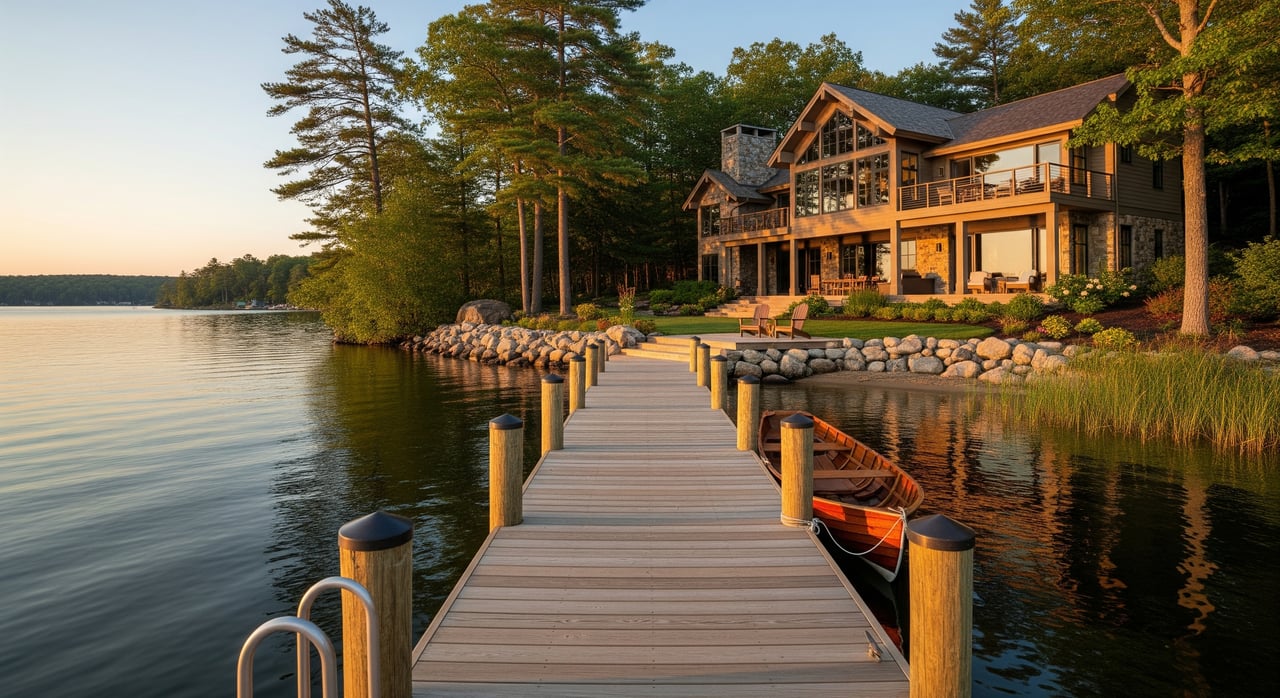
Shopping for a Houghton Lake place and wondering what you can actually do with the shoreline or a dock? You are not alone. Waterfront terms can be confusing, and the rules change from parcel to parcel around the lake. In this guide, you will learn what riparian rights usually include in Michigan, how frontage types differ, what to check on docks and shoreline work, and the exact records and offices to contact before you write an offer. Let’s dive in.
Riparian rights in Michigan
In Michigan, “riparian” or “littoral” rights are property rights tied to land that touches a body of water. On lakes, these rights usually include reasonable access to the water, the ability to keep a boat at your frontage, and the potential to place a dock, subject to rules.
These rights are not unlimited. They are shaped by state law and the public trust in navigable waters, local zoning, and whatever is recorded on title, such as easements or deed restrictions. For a quick overview of state roles, review the Michigan Department of Environment, Great Lakes, and Energy (EGLE) permitting resources and the Michigan Department of Natural Resources (MDNR) guidance on boating and public waters. You can start with EGLE at the agency homepage and MDNR at its main site:
- EGLE: Michigan Department of Environment, Great Lakes, and Energy
- MDNR: Michigan Department of Natural Resources
Houghton Lake basics
Houghton Lake is one of Michigan’s largest inland lakes and supports heavy boating and year-round recreation. The shoreline crosses multiple townships within Roscommon County, so local zoning and dock rules can vary.
The big idea is simple. Your rights depend on the exact parcel you buy, the recorded documents attached to it, and the township that governs it. Always verify the parcel’s status and rules for its specific location before relying on assumptions or marketing language.
What riparian rights usually include
Most lakefront owners in Michigan can expect the following, subject to state and local limits:
- Reasonable access for swimming, launching small craft, and temporary mooring.
- The ability to place and use a private dock, within size and placement limits.
- Seasonal lifts or similar structures if allowed by local rules and permits.
- Shoreline use that does not unreasonably interfere with neighbors or navigation.
Common limits include the public-trust doctrine, “reasonable use” standards, zoning setbacks, and environmental protections. Activities in wetlands, along protected shorelines, or below the ordinary high-water mark often require state permits. EGLE is the lead state agency for those reviews. See EGLE’s site to understand when permits apply: EGLE permits and programs.
Frontage and access types that matter
Not all “waterfront” listings carry the same rights. Your use, dock potential, and resale value depend on how the property touches or accesses the lake.
Deeded water frontage
The lot physically touches the shoreline. Riparian rights are usually appurtenant to the parcel. This is the most straightforward setup for private docking and direct access.
Shared frontage
Several lots share one stretch of shoreline. The plat, deeds, or association documents outline how rights are divided. Private docks may be limited or assigned.
Deeded access easement
An inland lot has a recorded easement to reach the lake, often via a path or access lot. Dock rights are not automatic. The easement language controls what is allowed.
Association or community access
An HOA or neighborhood owns the access parcel. Use and maintenance are governed by recorded association documents. Docking may be communal or restricted.
No formal access
Some near-lake properties have no recorded access. If access depends on neighbor permission, it can be revoked. Lenders and title companies may flag this as a risk.
Docks and shoreline work on Houghton Lake
Several players regulate docks and shoreline activities on inland lakes in Michigan:
- EGLE reviews permits for work in wetlands and on lakebeds, and for structures that may affect public waters. See the agency’s overview at EGLE.
- Your township and Roscommon County enforce zoning, setbacks, and sometimes dock length or slip limits.
- MDNR enforces boating rules, no-wake zones, and safety. See statewide boating information at MDNR.
What to expect:
- Dock length and slip limits are often set by local ordinance. Seasonal floating docks may be treated differently than fixed structures.
- Boathouses and permanent platforms are commonly restricted. Shoreline alterations, such as riprap or seawalls, typically require permits.
- Work below the ordinary high-water mark often triggers EGLE review. Keep copies of any past permits with the property records.
- Michigan requires steps to prevent aquatic invasive species. Review statewide guidance at the state’s joint AIS hub: Michigan Invasive Species.
How to verify a parcel’s rights
Use a simple sequence. Start with recorded documents, then move to local rules.
Deed and legal description. Confirm the parcel actually touches the lake or has a recorded access easement. Look for riparian language and any reservations.
Survey. Order a current survey to verify lot lines, frontage measurements, and encroachments.
Title commitment. Review exceptions, easements, and restrictions. Make sure access and any dock rights are insurable.
Local zoning check. Contact the township zoning office for the parcel’s address to confirm dock limits, setbacks, and any shoreland rules.
Permits and approvals. Request copies of EGLE and local permits for any existing dock, lifts, seawalls, or shoreline work. If permits are missing, ask the officials what it would take to bring the setup into compliance.
Helpful references as you research:
- County records: Roscommon County
- Shoreline and wetlands permits: EGLE
- Boating and public waters rules: MDNR
- Homeowner guides and best practices: MSU Extension and Michigan Sea Grant
Buyer checklist for Houghton Lake
Gather these items before you write an offer:
- Recorded deed and legal description for the full parcel.
- Current survey or a plan to obtain one after acceptance.
- Title commitment with all easements and restrictions.
- HOA or access-lot documents if any shared access exists.
- Copies of EGLE and township permits related to docks, lifts, seawalls, or shoreline work.
- Any correspondence about past disputes or boundary questions.
Key questions to ask:
- Is the frontage deeded, shared, or via a recorded easement? What exactly does the easement allow?
- Are there dock length or slip limits for this shoreline segment?
- Who owns the adjacent lakebed and how might that affect placement of a dock or lift?
- Does the existing dock or shoreline work have permits and final approvals?
- Are there no-wake zones, seasonal rules, or invasive species procedures that affect use?
Red flags to slow down for:
- Marketing says “waterfront,” but the deed does not touch the lake and no easement is recorded.
- Access depends on neighbor permission rather than a recorded right.
- Multiple owners claim the same narrow frontage without a clear agreement.
- Missing permits for existing structures or unclear “grandfathering.”
- Conflicts between the deed, survey, and county parcel map.
Who to contact in Roscommon County
Start with your parcel’s address to identify the correct township, then call or visit these offices and resources:
- Roscommon County Register of Deeds for recorded documents and plats. Visit the county portal: Roscommon County
- Your township zoning or planning office for dock rules, setbacks, and shoreline standards.
- EGLE for permit requirements related to docks, lifts, seawalls, grading, or work below the ordinary high-water mark: EGLE
- MDNR for boating regulations and public access information: MDNR
- Local lake associations or improvement boards for weed control programs, water level updates, and community norms.
- A licensed surveyor and a title company experienced with Roscommon County waterfront.
- A local real estate attorney if you need help interpreting easement language or shared-access agreements.
Buying on Houghton Lake should feel exciting and clear. When you verify the recorded rights, confirm local rules, and keep good documentation, you protect your weekend plans and your resale value. If you want a second set of local eyes on a deed, easement, or dock plan, reach out to the Laura & Kayla Team. Connect with Laura Corpe to “Find Your Escape.”
FAQs
What are riparian rights for a Houghton Lake homebuyer?
- They are property rights tied to land that touches the lake and typically include reasonable access, docking, and shoreline use, subject to state permits and local zoning.
How can I confirm true waterfront frontage on a Roscommon County parcel?
- Review the recorded deed and legal description, order a current survey, and compare both to county parcel records before relying on marketing terms.
Do inland lots with deeded access to Houghton Lake get dock rights?
- Not automatically. The recorded easement language controls whether docking is allowed or if the access is for foot travel only.
What permits are required to build or modify a dock on Houghton Lake?
- Many docks need local approval and some projects require EGLE permits, especially for fixed or below-waterline work. Start with your township and EGLE.
Who sets boating and no-wake rules on Houghton Lake?
- Statewide laws are enforced by MDNR, and local zones can be designated. Check current rules with MDNR and your township.
What should I request from a seller before I make an offer on a waterfront home?
- Ask for the deed, survey, title commitment, any HOA or access documents, and copies of all EGLE and township permits for existing docks or shoreline work.