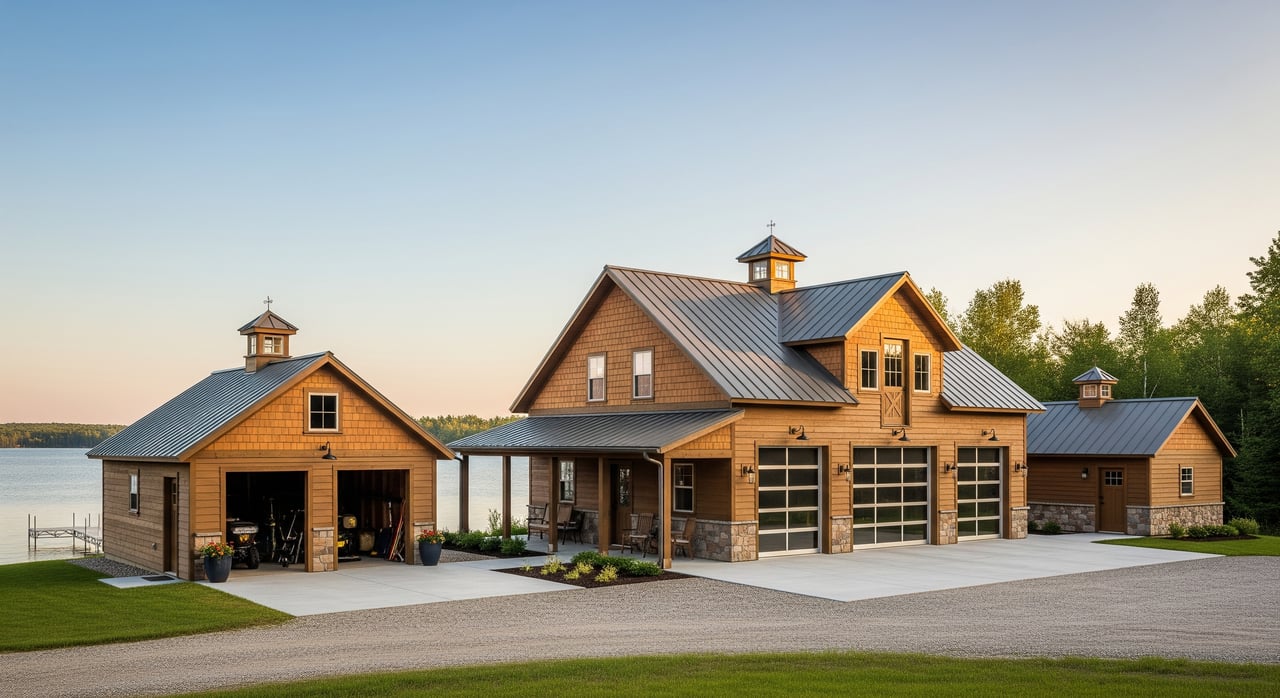
Shopping for a home near Prudenville and wondering if that big pole barn or outbuilding truly fits your plans? You’re not alone. In Northern Michigan, the right barn can make lake life easier, protect your investment, and add real utility. This guide walks you through how to evaluate size, doors, slab and insulation, electrical and heat, and the key red flags to watch for during a showing. Let’s dive in.
Start with local rules and permits
Before you fall in love with a building, confirm what’s allowed on the property. In the Prudenville area, requirements for setbacks, size, foundations, and allowable uses are set by Roscommon County and your specific township zoning office. Michigan’s adopted building codes and the National Electrical Code apply to structural and electrical work. Always verify current rules with local offices rather than assuming general “pole barn” allowances.
Ask the seller for copies of permits and final inspection records for any outbuilding. If electrical service, plumbing, or a new slab was added, those items often require permits. Converting a barn to living space almost always requires formal approvals and inspections. Missing paperwork is common, so it is worth checking early.
Size and access matter most
Start with measurements. Pole buildings often provide generous clear spans, which means more usable interior space for boats, equipment, or a workshop. Confirm the footprint, interior height at the eaves and peak, and the aisle space you need to move around.
Door width and height are make-or-break numbers. Typical overhead door heights you’ll see include 7 to 8 feet for cars, 9 to 10 feet for taller trucks or some boats, and 12 to 14 feet for many boats on trailers, RVs, or equipment. Measure both the height and the width. Also check the driveway approach and turning radius. Tight gates, low branches, or steep approaches can make backing a trailer frustrating.
Foundation, slab, and posts
Look for how the structure meets the ground. Posts are commonly set in concrete piers or on footings. Walk the perimeter and note drainage. Standing water near posts can lead to rot or frost problems over time.
If there is a concrete slab, ask about thickness and reinforcement. A light-duty slab is often about 4 inches thick. For heavier loads like tractors or a lift, you will typically want 5 to 6 inches or more with wire mesh or rebar. Hairline cracks can be normal. Larger cracks, spalling, or uneven settlement need a closer look.
Northern Michigan freezes deeply, so proper frost protection and post embedment depth matter. If you are unsure, confirm frost-depth and foundation requirements with the local building office.
Framing and roof strength
Post size, spacing, and roof framing tell you a lot about capacity. Buildings here must handle real snow loads. Look for sound trusses, straight lines, and good bracing. Low-pitch metal roofs are common and economical, but they call for the right insulation and condensation control.
Check the roof and siding for loose fasteners, corrosion, or damaged panels. Look at roof-to-wall flashings. When it rains, water should move off the building and away from posts and slab.
Weatherproofing and drainage
Good drainage is your first defense against maintenance headaches. Positive grading away from the building, gutters, downspouts, and culverts help move water off-site. Ponding water or damp soil at posts is a red flag that deserves follow-up.
Examine siding and roofing for rust, holes, or missing sealant. Inside, look for water stains or white mineral deposits that point to past condensation or leaks.
Insulation and condensation control
Uninsulated metal barns are fine for basic storage, but Michigan’s climate demands a smart plan if you want a workshop or winterized storage. Common options include fiberglass batts with a vapor barrier, rigid foam board, or spray foam. Spray foam can reduce condensation and air leaks, which is helpful around lakes, but it comes at a higher cost.
If you see rust, water marks, peeling paint, or mildew, the building may have condensation issues. Proper insulation and a continuous vapor barrier are often the fix, especially for metal roofs and walls.
Electrical and lighting
Ask about electrical service size and whether the barn has a subpanel or a dedicated service. Many outbuildings run on a subpanel from the house with 120V circuits, while some have their own 100 to 200 amp service. Your plans for tools, a compressor, or electric heat will determine what you need.
Check for GFCI protection where required, labeling on the panel, and clean, professional wiring. Adequate outlets and good lighting matter for safety and comfort. Natural light helps, but well-placed LED shop lighting can make a big difference for projects.
Heating and ventilation
Heat changes how you can use the space in winter. Common options include gas or propane unit heaters, radiant tube heaters, wood stoves, electric baseboard, or mini-split heat pumps. Mini-splits are increasingly popular for efficiency and convenience and can add cooling in the summer.
Ventilation is essential, especially for workshops or boat storage. Look for ridge and soffit vents or powered fans that help remove humidity and fumes. Good ventilation limits mold, corrosion, and fuel odors.
Water, plumbing, and site services
Note any hose bibs, laundry sinks, or drains. If a bathroom or sink is present, confirm whether it connects to septic. You should not see greywater discharging onto the ground. Exterior lighting, motion sensors, and locks can improve security for stored gear and seasonal toys.
Use cases: boats and lake gear
Storing a boat inside keeps it cleaner and protected. Measure door height at full opening and make sure interior peak height works with your tower or canopy. You may want wider door openings for easier trailer backing.
Humidity control matters near lakes. For boat storage, consider insulation, a vapor barrier, and a dehumidifier or low-level heat to help manage mildew. Safe storage for fuel and batteries should follow electrical and fire safety standards.
Use cases: equipment and tractors
For tractors and implements, look at slab thickness, door width, and header clearance. Drive-through layouts with doors at both ends can be a major convenience when moving equipment regularly. Wide, unobstructed aprons in front of doors make loading and unloading easier.
Use cases: workshop or hobby space
If you want to build, weld, or woodwork, think power and air. You will likely need dedicated circuits, dust collection, and ventilation. Clean combustion or electric heat options reduce safety concerns, and added insulation helps control condensation and comfort.
Use cases: RVs and campers
RVs often need tall and extra-long doors. Check the overall length of the bay as well as height. Electrical hookups at 30 or 50 amps can be helpful. Verify whether hookups are allowed and if service comes from the house or a separate meter.
Quick showing checklist
Bring a tape measure and take photos. Focus on:
- Building footprint, clear span, eave height, and peak height
- Door widths and heights (measure both)
- Slab thickness at any exposed edge and signs of cracking or settlement
- Post bases for rot or movement and exterior grading
- Siding and roofing condition, fasteners, and flashing
- Evidence of condensation: rust, stains, peeling paint, or mildew
- Electrical panel size, labeling, and visible GFCI protection
- Heating type and fuel source (propane tank or meter)
- Ventilation at ridge and soffits or mechanical fans
- Driveway access, gates, turning radius, and overhead obstructions
Red flags that deserve follow-up
- No permits for major work like electrical service, slab replacement, additions, or conversions
- Posts that appear to sit directly in soil with signs of rot or insect damage
- Large slab cracks with vertical displacement greater than about 1/2 inch
- Sagging roof lines or visibly repaired trusses
- DIY-looking wiring, missing grounding, or an unlabeled panel
- Persistent moisture or strong odors that signal leaks or poor ventilation
- Inadequate door height or interior clearances for your boat, RV, or equipment
Professional inspections worth considering
Not all home inspectors include large outbuildings in their scope, so confirm coverage in advance. For extra assurance, you can bring in a licensed electrician to evaluate service capacity, a structural engineer to assess framing or settlement concerns, and a local contractor or pole-barn specialist to review slab adequacy or upgrade options. The county building office can help you check permit history and code compliance.
Common upgrades and cost context
Buyers in Roscommon County often prioritize upgrades that improve usability and protect the structure. Popular improvements include adding insulation and a vapor barrier, upgrading to a larger or insulated overhead door, increasing electrical capacity, installing a mini-split or unit heater, and improving grading or post/footing conditions.
Costs vary widely by building size, access, and scope. Simple fixes like basic insulation can be far more affordable than converting to a fully conditioned workshop. Plan to get multiple local estimates before you budget for bigger changes.
Local climate tips for Prudenville
Northern Michigan winters bring real snow and freeze-thaw cycles, so you want an outbuilding designed for snow loads with sound drainage away from posts and slab. Seasonal humidity and proximity to water can speed up corrosion and mildew. Moisture control and ventilation are your best friends for long-term durability.
Practical next steps
- Confirm the property’s township and call the zoning office to verify allowable uses and setbacks.
- Request copies of permits and final inspections for the barn and any utilities.
- Measure door openings, interior heights, and bay lengths against your boat, RV, or equipment.
- Check slab thickness and post condition, and look for signs of condensation.
- Line up targeted inspections if you see structural, electrical, or moisture concerns.
Ready to compare options or talk through a specific property near Prudenville, Higgins Lake, Houghton Lake, or St. Helen? Reach out to the Laura & Kayla Team for local guidance grounded in experience with lake and acreage properties. Start your conversation with Laura Corpe and let’s find the outbuilding that truly fits your plans.
FAQs
What permits do I need for a pole barn in Roscommon County?
- Permit requirements depend on size, utilities, and use, so contact the Roscommon County building department and your township zoning office to confirm exact rules for your parcel.
How tall should my barn door be for a boat on a trailer?
- Many boats need 9 to 10 feet of clearance, while some boats with towers may require 12 to 14 feet; measure your specific setup and the full door opening height.
How thick should a concrete slab be for tractors or heavy equipment?
- Light-duty use often works with about 4 inches, but heavier equipment typically needs 5 to 6 inches or more with reinforcement like wire mesh or rebar.
Can I convert a pole barn to living space in Northern Michigan?
- Conversions almost always require permits and inspections for structure, electrical, and any plumbing, so verify code requirements with local officials before planning.
What’s the best way to control condensation in a metal barn?
- Use continuous insulation and a proper vapor barrier, consider spray foam for air sealing, and add ventilation to manage humidity.
Do I need dedicated electrical service for a workshop?
- It depends on your tools and heat source; many barns run on a subpanel, but workshops or electric heat may benefit from a dedicated 100 to 200 amp service.