Thinking about buying hunting land near Harrison, Michigan? A great-looking parcel can be a smart escape, a future camp, or a long-term investment, but raw land often comes with questions that are easy to miss at first glance. If you want to buy with confidence, it helps to look beyond acreage and focus on access, zoning, soil, water, and what the land can realistically support. Let’s dive in.
Start With Jurisdiction
One of the first things to confirm is whether the parcel is inside the City of Harrison or outside city limits in a township. That single detail can shape what rules apply to your land and what approvals you may need before making changes.
Within the City of Harrison, the city zoning ordinance applies, and the official zoning map is kept by the city clerk. The city also provides applications for zoning compliance, site plan review, special land use, variances, and parcel modifications, which gives you a clear path if you plan to improve the property.
Outside the city, zoning is township-specific. Clare County’s building development office keeps a township zoning permit list, and nearby examples show how different those rules can be from one township to the next. That means you should verify the exact township and contact the right local office before you assume a parcel will work for your plans.
Even if zoning seems simple, do not stop there. The City of Harrison ordinance states that zoning does not override private easements, covenants, or more restrictive state or federal rules, so a title review still matters.
Screen the Parcel Early
Before you spend time and money moving forward, do a basic parcel screen. The City of Harrison points buyers to BS&A Property Search for ownership and assessment data and the Clare County GIS viewer for parcel boundaries and neighboring parcels.
This early review can help you spot issues like odd parcel shape, nearby development, or neighboring lots that affect access. If the property is in the city, Harrison also offers a free conceptual review meeting, which can help identify zoning concerns before you get too far into the process.
Verify Legal Access
Access is one of the biggest issues with hunting land, especially if you are buying for seasonal use now and possible improvements later. You should verify deeded access in writing rather than assume that a trail, path, or visible road gives you legal rights to enter the property.
Michigan DNR notes that if a parcel is landlocked and has no existing deeded access, access usually must be acquired from an adjoining owner or through an easement of necessity. That is a major reason to review title carefully and bring in a real estate attorney when access is unclear.
DNR also recommends getting a survey because it identifies boundaries, and it notes that road access shown in records is not guaranteed. In plain terms, maps and listings can be helpful, but they do not replace boots-on-the-ground verification.
Check Roads and Driveways
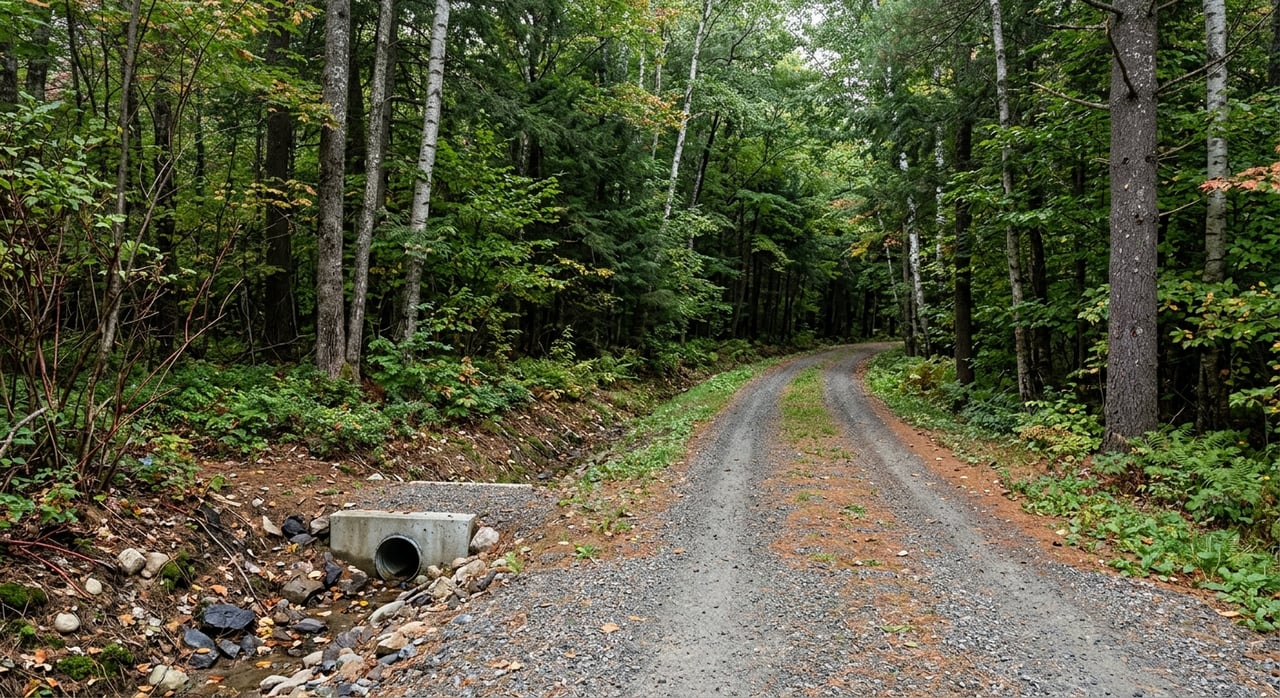
If your plan includes more than just seasonal hunting use, road questions become even more important. A future driveway, private road, culvert, or utility tie-in may require permits from the Clare County Road Commission.
The road commission’s permit categories include driveways, private roads, utility installations, road crossings, grading and drainage, sanitary and watermain or storm connections, and tree or vegetation removal in the right of way. So if you picture building a cabin, opening up a trail entrance, or adding utilities later, make sure the access route can support that plan.
It is also smart to find out whether the route depends on a county road or a private road agreement. Title documents and road-related requirements may affect what can be built, maintained, or approved in the future.
Test Buildability Before You Buy
A hunting parcel can look ideal in photos and still fall short when it comes to septic, wells, or a cabin site. In Clare County, CMDHD performs vacant land evaluations to determine whether a parcel can support an on-site septic system and well.
That review looks at several factors, including soil type and permeability, depth to the seasonal high water table, slope, separation distances, suitable area, hydrogeology, runoff patterns, proposed land use, easements and rights-of-way, building setbacks, buried utilities, and adjacent development. In other words, buildability is a full-site question, not just a quick yes or no.
CMDHD also states that septic permits and well permits are required before a building permit is issued. If you are considering any future cabin, camp, or outbuilding that depends on water and septic service, it makes sense to ask these questions before closing.
A practical advantage here is location. CMDHD’s Clare County branch office is in Harrison, which can make it easier to ask pre-purchase questions and get local guidance on environmental health planning.
Understand Well and Water Issues
If a parcel already has a well, or if you may drill one later, water quality matters. CMDHD recommends annual testing of private wells for total coliform bacteria and nitrate, and it also recommends testing after repairs, construction, flooding near the well, or other well changes.
For a broader look, EGLE’s Water Well Viewer can help you check existing wells, wellhead protection areas, and nearby contamination sites. It is a useful research tool when you want more context about the surrounding area before you commit.
Watch for Wetlands and Floodplain Limits
Wet ground can change everything about how you use hunting land. It may affect trails, food plot plans, parking areas, septic placement, and any future building site.
EGLE’s Wetlands Map Viewer is a helpful screening tool, but it only shows approximate wetland locations and is not a jurisdictional determination. If you need certainty for a smaller project, EGLE’s Wetland Identification Program can provide a site-specific review with a three-year guarantee within the reviewed area.
Floodplain questions matter too, especially near a river, stream, or drain. EGLE states that alteration or fill in the 100-year floodplain may require a state permit, and new residential construction is prohibited in the floodway portion of the floodplain.
Match the Land to Your Hunting Plan
Not all acreage performs the same way for recreation. A parcel’s usefulness depends on how the land actually lays, drains, and supports your intended use.
USDA NRCS Web Soil Survey provides official soil data that can help with land-use and management decisions. For buyers looking at hunting land near Harrison, it can be a strong first step in evaluating drainage, terrain limitations, and whether the property may support trails, parking, or a potential cabin site.
A smart way to evaluate fit is to use the same factors local agencies use when reviewing buildability. That includes soils, water table, slope, runoff, wetlands, floodplain, access, setbacks, and the amount of usable buildable area.
This is the big takeaway: usable hunting land is not just about the number of acres. It is about whether you can access it legally, use it as intended, and get future improvements approved if your plans grow over time.
Compare Private and Public Options
If you are still deciding how much land you need, it can help to compare private ownership with nearby public hunting opportunities. Michigan DNR’s Where to Hunt resources point to public lands, state game areas, and the Hunting Access Program.
DNR explains that the Hunting Access Program is a private-land access program where the department leases land from owners who allow licensed hunters to use it. For some buyers, nearby public access can complement a smaller private parcel and help you think more strategically about how much land to purchase.
A Practical Buying Checklist
Before you buy hunting land near Harrison, make sure you can clearly answer these questions:
- Is the parcel in the City of Harrison or a specific township?
- What zoning rules apply to that exact location?
- Does the title show deeded legal access?
- Should you order a survey to confirm boundaries?
- Will any driveway, culvert, or road work require county permits?
- Can the site support a septic system and well?
- Are there wetlands, floodplain limits, or seasonal water issues?
- How much of the acreage is truly usable for your goals?
- Do easements, covenants, or private road agreements affect the property?
Taking the time to work through these questions can save you from expensive surprises later. It can also help you separate a parcel that simply looks good online from one that truly fits your vision.
When you are searching for recreational land, details matter. The right property can become your Northern Michigan escape, but the best purchases usually come from careful local research, clear due diligence, and a plan grounded in how the land actually works. If you want help sorting through acreage options near Harrison and making sense of what a parcel can realistically support, Laura Corpe is here to help you find your escape.
FAQs
What should you check first when buying hunting land near Harrison, MI?
- First, confirm whether the parcel is inside the City of Harrison or in a township, because zoning and permit rules depend on the exact jurisdiction.
Why does legal access matter for hunting land in Clare County?
- Legal access matters because a parcel can be landlocked even if a path or road appears to reach it, and deeded access should be verified before closing.
Can vacant land near Harrison support a cabin and septic system?
- Possibly, but you should confirm it through a vacant land evaluation with CMDHD, which reviews soils, water table, slope, setbacks, runoff, and other site conditions.
How do you check for wetlands on hunting land near Harrison?
- You can start with EGLE’s Wetlands Map Viewer for screening, but it only shows approximate locations and does not serve as a final jurisdictional determination.
Do you need permits for a driveway on rural land near Harrison, Michigan?
- You may, because the Clare County Road Commission handles permits for items like driveways, private roads, culverts, utility work, grading, and drainage.
Is more acreage always better for hunting land near Harrison?
- Not necessarily, because a smaller parcel with legal access, usable ground, and realistic improvement potential may fit your goals better than a larger parcel with major limitations.